Shinto & Japanese · English · 1905
Shinto: The Way of the Gods
W. G. Aston
By the translator of the Nihongi, and useful here for the arguments he refuses to settle. Aston reports Motoori holding that the actual sun in heaven is what is worshipped as Amaterasu while treating the Kojiki sun-myth as history at the same time, and records Florenz rejecting Hirata's identification of Susa-no-wo with the moon-god Tsuki-yomi — noting that if that deity ever had a lunar quality, the Kojiki and the Nihongi had already forgotten it. Disagreements preserved rather than resolved are what a corpus of this kind needs from a secondary source.
Read Shinto: The Way of the Gods in full at the linked edition →What this text attests · 5
| Name here | Rank given | # | Powers described |
|---|---|---|---|
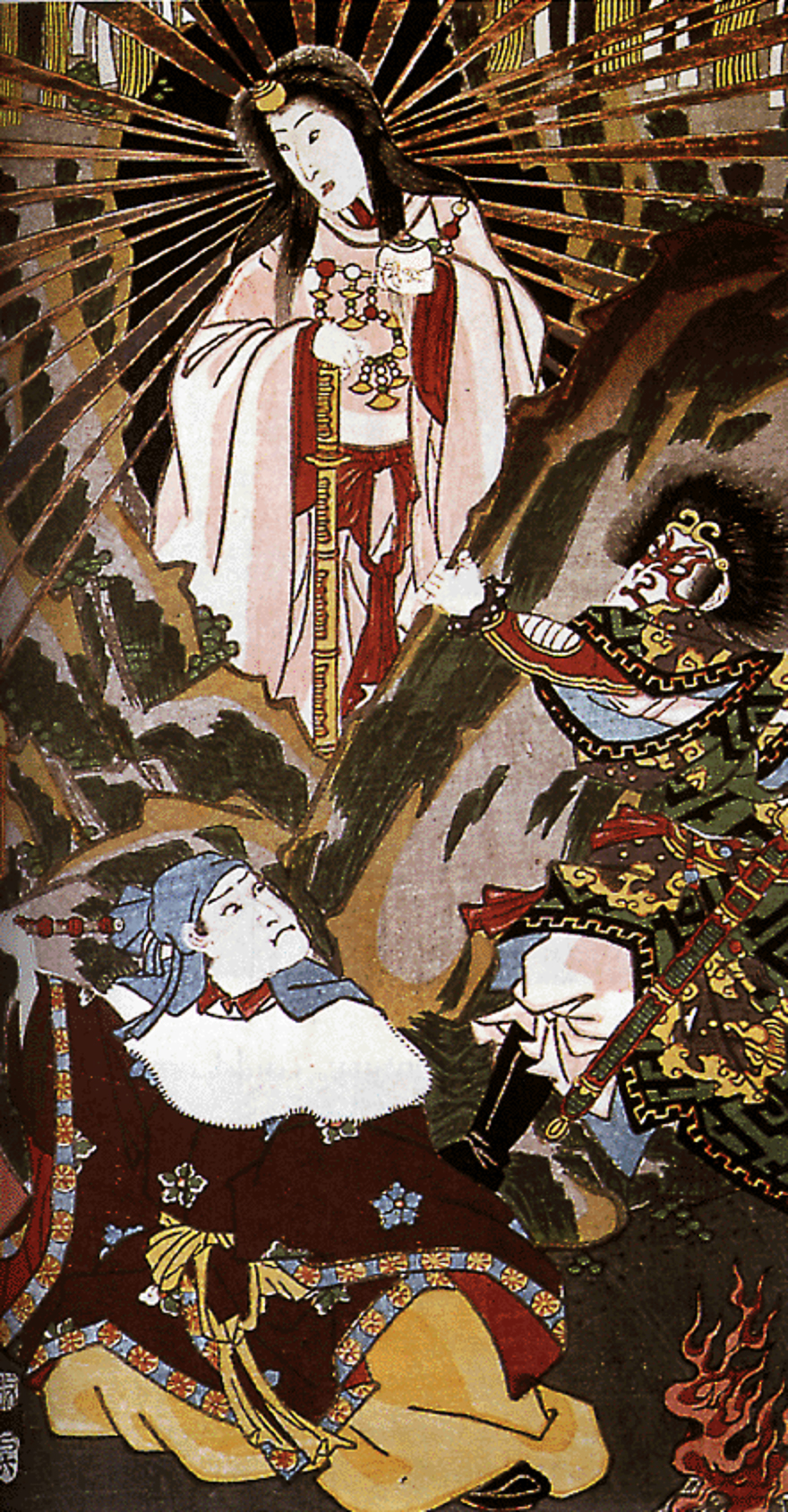 Amaterasu no Oho-Kami = Amaterasu | — | — | The Heaven-shining-great Deity, and the place where Aston catches the tradition holding two positions at once: he reports Motoori saying it is the actual sun in heaven that is worshipped under this name, while believing at the same time that the Kojiki sun-myth is real history. A goddess who is also an astronomical body and also a chronicle entry, in one sentence by one scholar. |
| — | — | Carried throughout as the male of the creating pair, on Aston's own translation of the Nihongi. | |
| — | — | The female of the pair, and the one who dies and is followed to Yomi. | |
Susa no wo = Susanoo | — | — | Appointed to rule the land of Yomi, in a Kojiki myth where Aston notes no trace of his rain-storm quality is perceptible. He records Florenz rejecting Hirata's identification of Susa no wo with the moon-god Tsuki-yomi, and adds that if the deity ever had a lunar quality it was forgotten by the time of the Kojiki and the Nihongi — a god's attributes visibly changing between one text and the next. |
Tsuki-yomi = Tsukuyomi | — | — | The moon-god, and the other half of the identification Florenz refuses. The corpus files the refusal rather than the identification. |