Zoroastrian · Middle Persian · c. 881; translation 1882
Dâdistân-î Dînîk
Manûshchîhr; tr. E. W. West, Sacred Books of the East 18
Ninety-two questions put to a ninth-century high priest and answered one at a time, which makes it the corpus's clearest view of Zoroastrian doctrine being reasoned rather than asserted. The nineteenth question asks whether departed souls can see Aûharmazd and Aharman, and the answer turns on Aharman having no material existence at all — an evil principle argued down to a privation, five centuries before the same argument is made in Latin about the devil.
Read Dâdistân-î Dînîk in full at the linked edition →What this text attests · 7
| Name here | Rank given | # | Powers described |
|---|---|---|---|
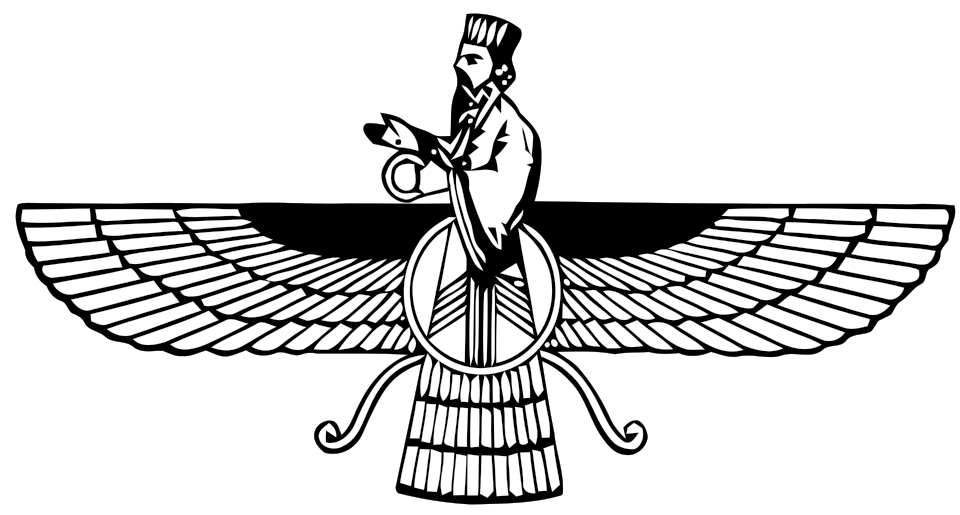 Aeshm = Aeshma | — | — | The demon of wrath, carried through the answers on the fate of the wicked. |
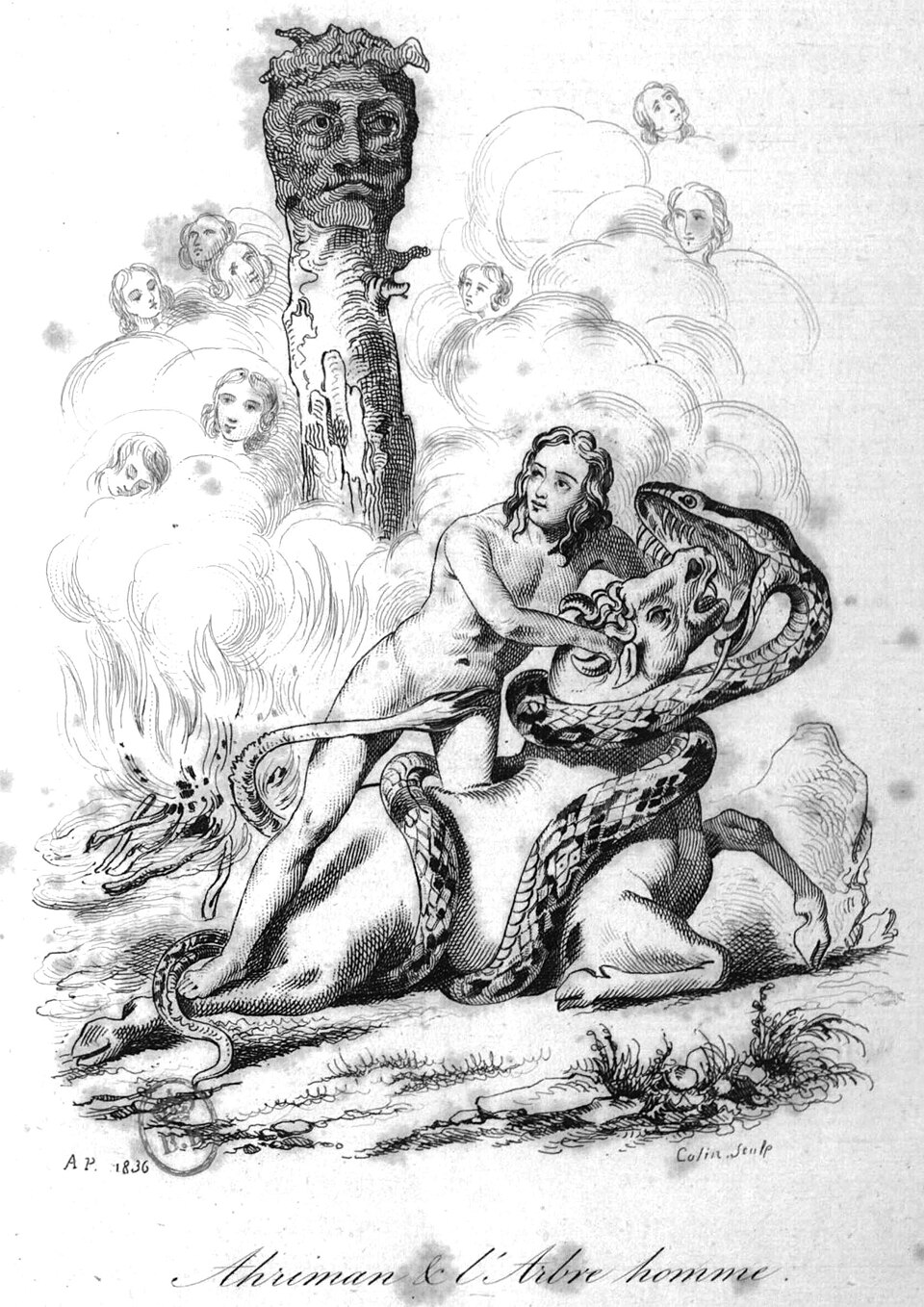 Aharman = Angra Mainyu | — | — | Answered, when asked whether departed souls can see him, with the statement that his is no material existence at all. An evil principle reasoned down to a privation by a ninth-century priest — the same move Augustine makes about evil in Latin, arrived at independently and applied to a named adversary rather than to a category. |
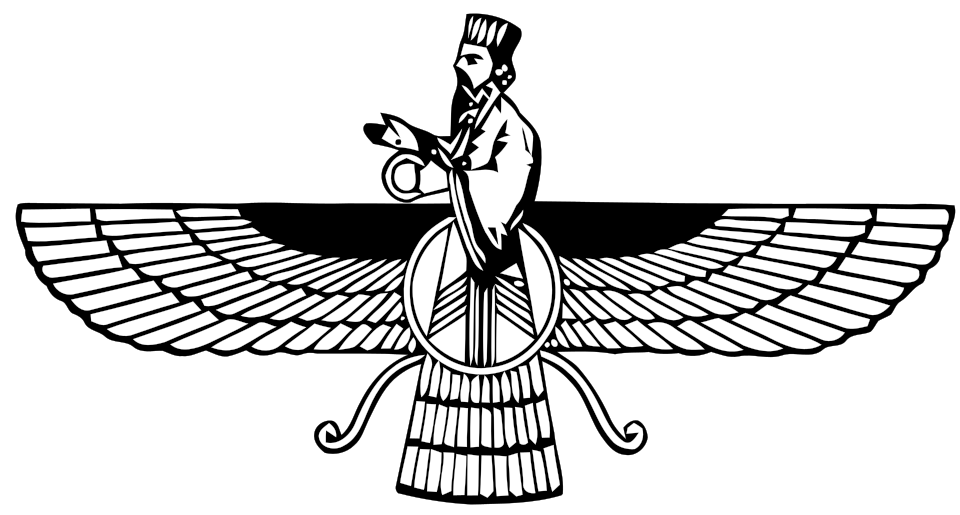 Amesha-spentas = The Amesha Spentas | — | — | The golden seat of the Amesha-spentas beside the golden seat of Ahura Mazda, in the passage on where the souls of the righteous gladly pass — the abode of Ahura Mazda, of the Amesha-spentas, and of all the other holy beings. |
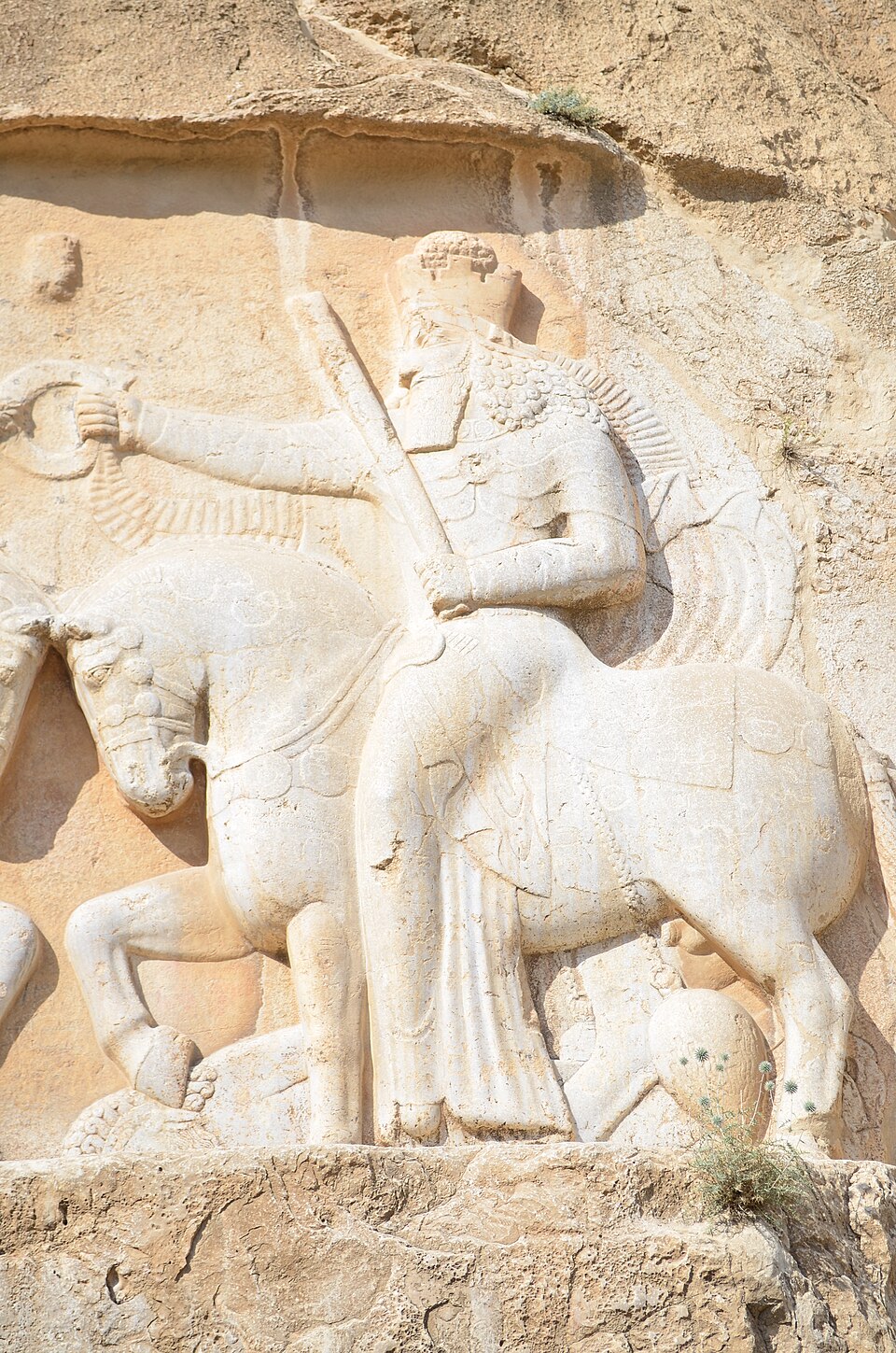 Aûharmazd = Ahura Mazda | — | — | The subject of most of the ninety-two questions, and in the nineteenth a spirit among the spirits, to be heard rather than seen — the answer notes he can hardly be considered visible except by the eye of faith. |
Dahâk = Zahhak | — | — | Carried in the Middle Persian form, the tyrant of the eschatology rather than the Shahnameh's serpent-shouldered king. |
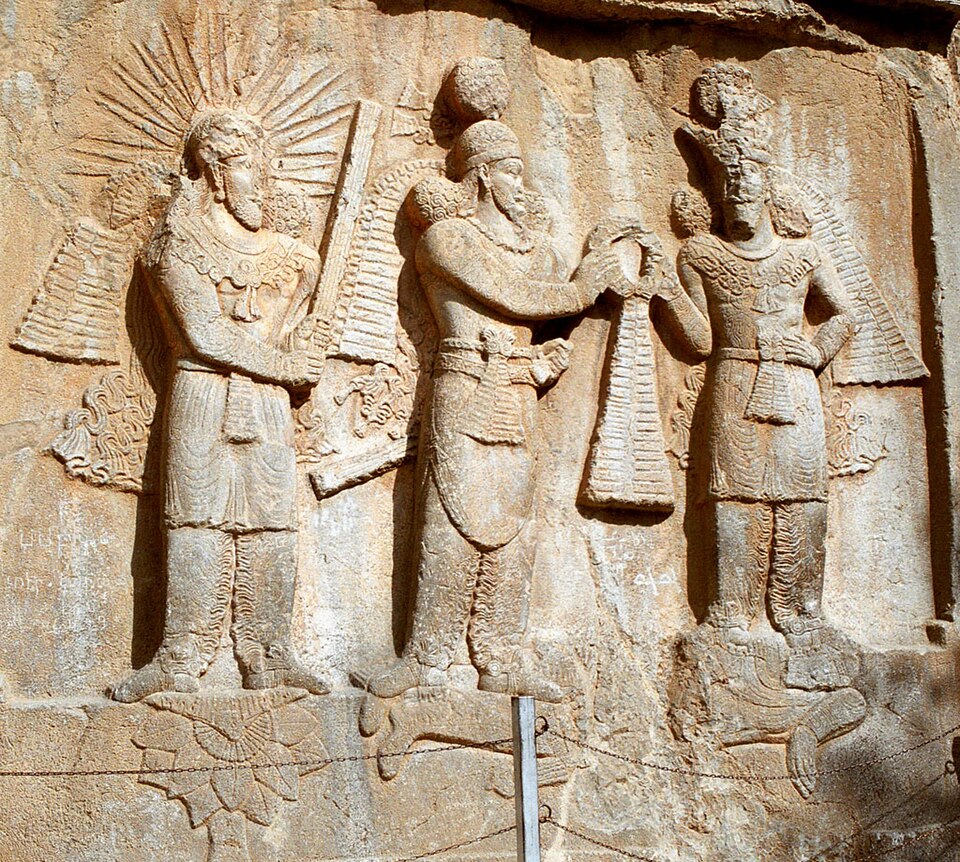 Mitrô = Mithra | — | — | Named among the powers attending the judgement of souls. |
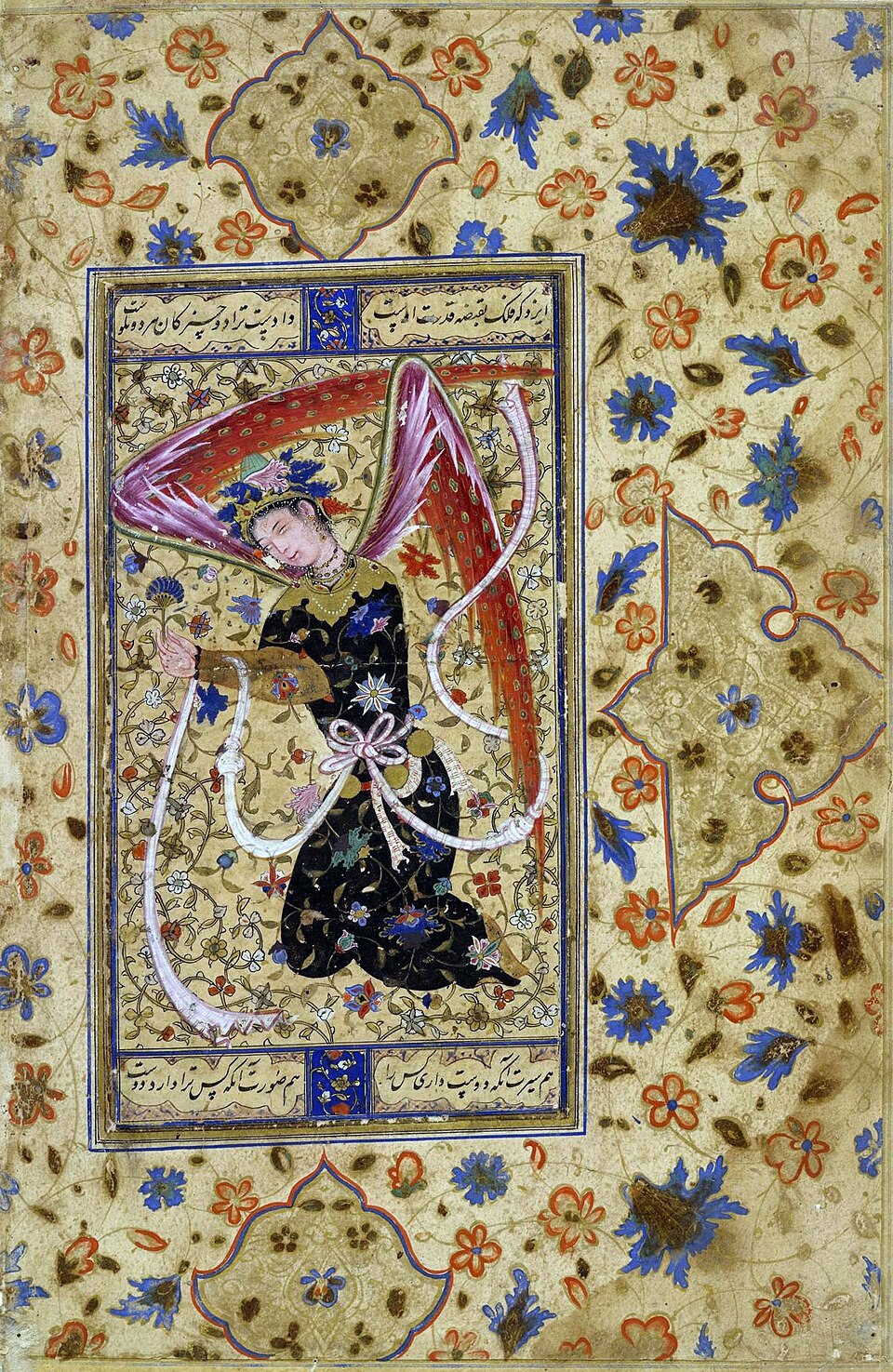 Srosh = Sraosha | — | — | Named repeatedly in the answers on the passage of the soul and the Kinvad bridge. |