Shinto & Japanese · English · 1895
The Religions of Japan, from the Dawn of History to the Era of Méiji
William Elliot Griffis
A missionary's survey, and carried with that in view. Griffis quotes Satow's translations of the Ise rituals addressed to Amaterasu, and he is frank that the opening generations of kami do nothing at all until Izanagi and Izanami are handed the jewelled spear. The judgements are a Protestant's and the corpus does not adopt them; the value is that he is describing what the liturgy said while it was still being said, and citing the translator rather than his own memory of it.
Read The Religions of Japan, from the Dawn of History to the Era of Méiji in full at the linked edition →What this text attests · 3
| Name here | Rank given | # | Powers described |
|---|---|---|---|
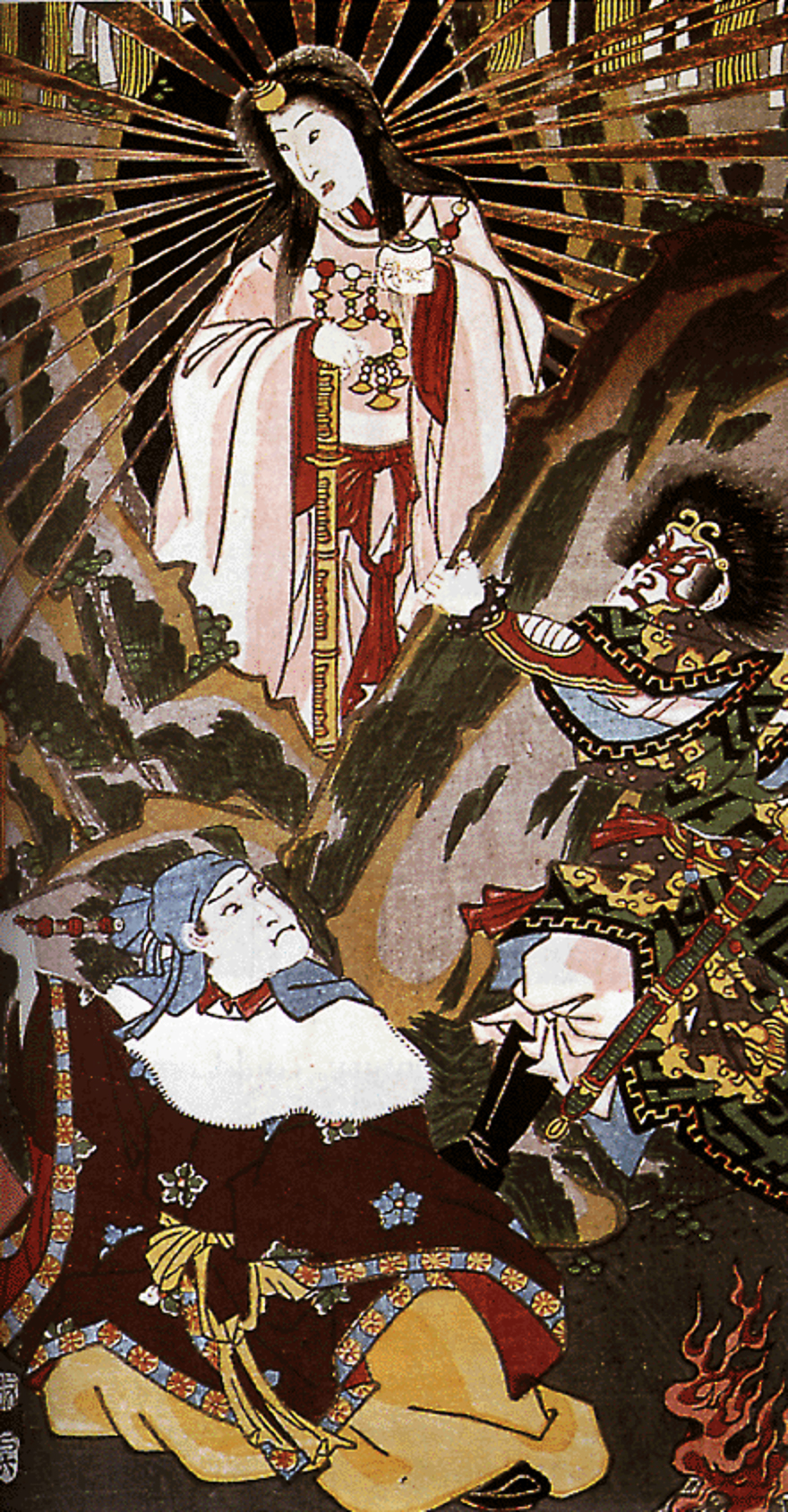 Amaterasu no Mikami = Amaterasu | — | — | The From-Heaven-Shining-Great-Deity, addressed in the ritual that the priest-envoy of the Nakatomi family carried annually to the temples at Ise. Griffis quotes Satow's translation rather than paraphrasing, which is why the row is here: a liturgy recorded in English while it was still being performed. |
| — | — | Given the jewelled spear by the seven divine generations, who in Griffis' reading do nothing else whatever. He is dismissive of the earlier kami as little more than the bioplasm of deity — a missionary's judgement the corpus does not adopt, and a fair description of how little those generations do. | |
| — | — | The other holder of the spear, and the point at which Griffis marks sex, motion and creation entering the myth together. |