Shinto & Japanese · Classical Japanese · 807; translation 1924
Kogoshūi: Gleanings from Ancient Stories
Inbe no Hironari; tr. Katō Genchi and Hoshino Hikoshirō
A memorial submitted to the throne in 807 by a member of the Inbe, a priestly house that believed the Nakatomi had written it out of the record. It retells the age of the gods to correct the Kojiki and the Nihongi rather than to repeat them, and the corrections are the point: Takamimusubi issues the commands in high heaven alongside Amaterasu, where the Nihongi gives them to Amaterasu alone. A rival account produced by the losing side of a priestly dispute is a better second witness than a friendly one.
Read Kogoshūi: Gleanings from Ancient Stories in full at the linked edition →What this text attests · 4
| Name here | Rank given | # | Powers described |
|---|---|---|---|
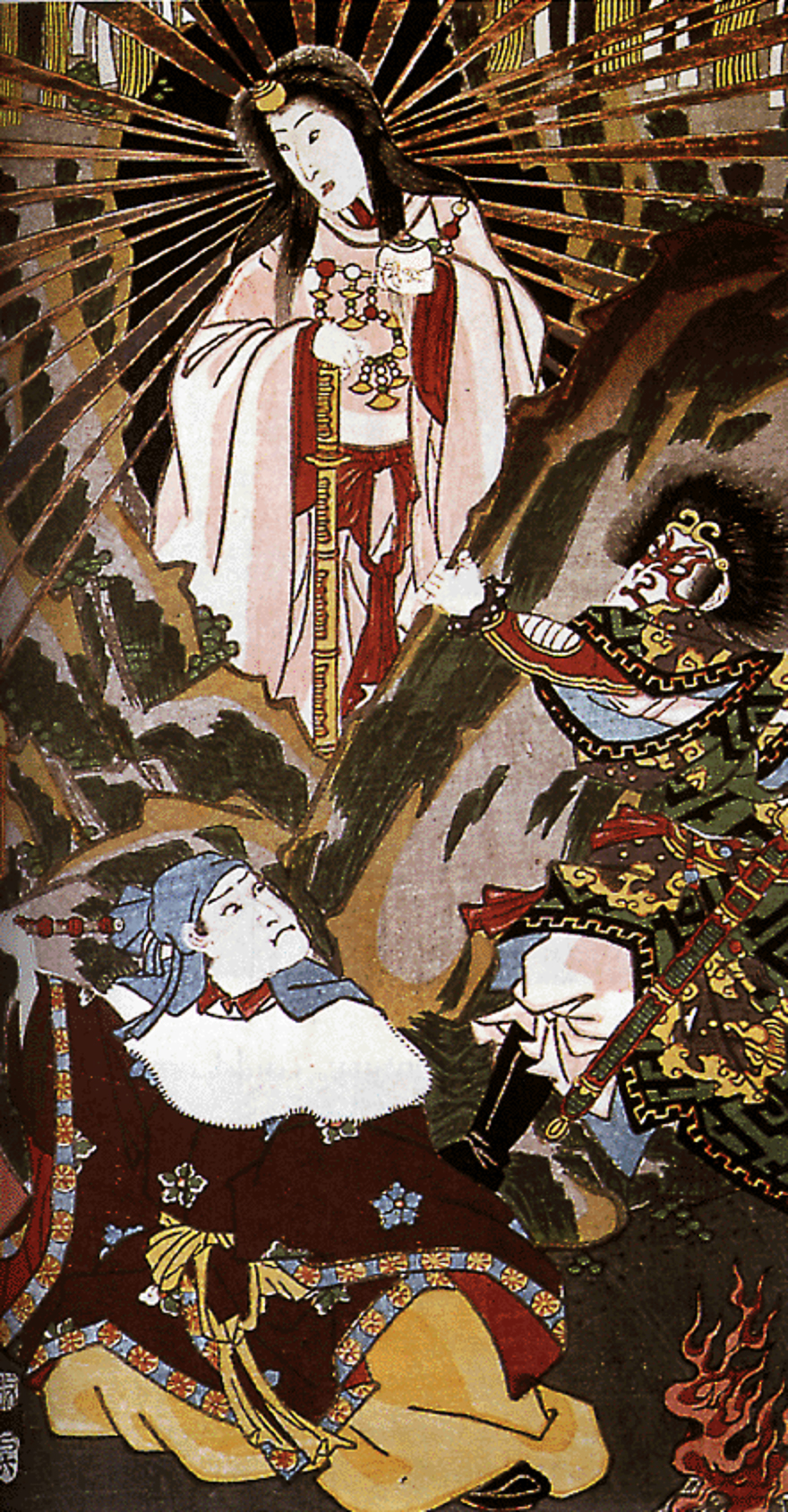 Amaterasu-Ō-Mikami = Amaterasu | — | — | Issuing the divine commands in high heaven together with Takamimusubi, where the Nihongi gives those commands to Amaterasu alone. The Inbe author is arguing for his own house's ancestor against the Nakatomi, so the correction is interested — and an interested correction is still evidence that the official version was contested when it was new. |
| — | — | The Divine Male, who with the Divine Female enters into conjugal relations and begets the Great Eight Island Country, its mountains and rivers, and the Sun-Goddess. | |
| — | — | The Divine Female of the same opening passage, named as the other parent of the islands and of Amaterasu. | |
| — | — | Named among the children of the primal pair, and no more than named — the moon-god is thin in every text that has him. |