Celtic · English · 1905
Celtic Myth and Legend, Poetry and Romance
Charles Squire
A synthesis of the Irish and Welsh cycles into a single pantheon, written when that was still thought possible. It is carried as reception rather than as evidence: Squire is not an independent witness to anything medieval, and where he and the Lebor Gabála disagree the Lebor Gabála is the older claim. What he is good for is the shape the gods had acquired by 1905 — Nuada and the Dagda arranged into offices, the Fomoire consolidated into an opposing principle — because that arrangement, not the manuscripts, is what most later writing inherited.
Read Celtic Myth and Legend, Poetry and Romance in full at the linked edition →What this text attests · 7
| Name here | Rank given | # | Powers described |
|---|---|---|---|
| — | — | The Fomorian champion of the eye, killed at Moytura by his grandson. | |
Brigit = Brigid | — | — | Married to Bress the Fomor, which puts her on both sides of the war at once — a genealogical awkwardness Squire reports without smoothing. |
| — | — | The master of every art, carried through the second battle of Moytura and identified with the Welsh Lleu — one of the identifications the whole book is built on and one the manuscripts do not make. | |
| — | — | The king of the Tuatha Dé Danann who loses a hand and is given a silver one, and with it the kingship back. | |
the Dagda = The Dagda | — | — | Placed at the head of the Tuatha Dé Danann as a father-god with a household of divine children around him, Angus among them. Squire is arranging a pantheon into offices in the manner of his period, which the Irish sources do not do. |
the Fomors = The Fomoire | — | — | Consolidated into a single opposing principle against the Tuatha Dé Danann. The medieval material is looser than this; the consolidation is Squire's and is why he is here. |
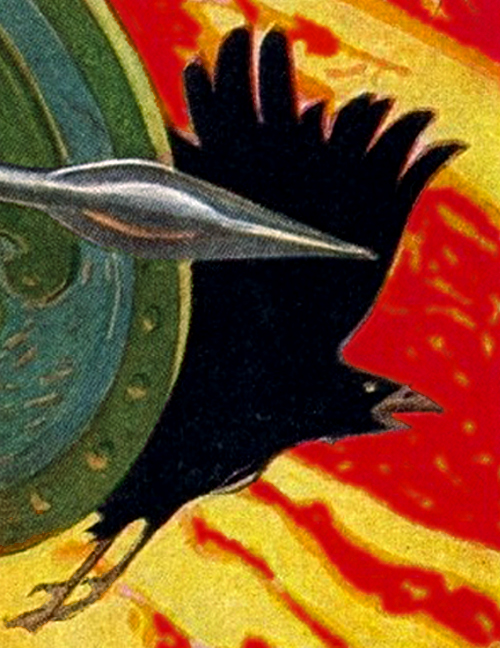 the Morrígú = The Morrígan | — | — | Indexed flatly as the Gaelic goddess of war, and then followed through the Táin in the three shapes she takes against Cú Chulainn — an eel, a wolf, and a black-maned heifer. The index is the interesting part: a figure the medieval texts never define is given a one-line job description, and that description is what the twentieth century received. |